A robot can inspect a pipe, tank, flare area, or offshore structure without sending a person into the first pass. That changes the job: people face fewer repeated exposures and handle remote checks, then step in when the machine finds something worth a closer look.
- Ground robots can carry cameras and gas sensors through restricted areas.
- Drones can inspect tall structures without scaffolding or a lift.
- Remote systems still need people to plan, review, and fix faults.
Where robots do useful work
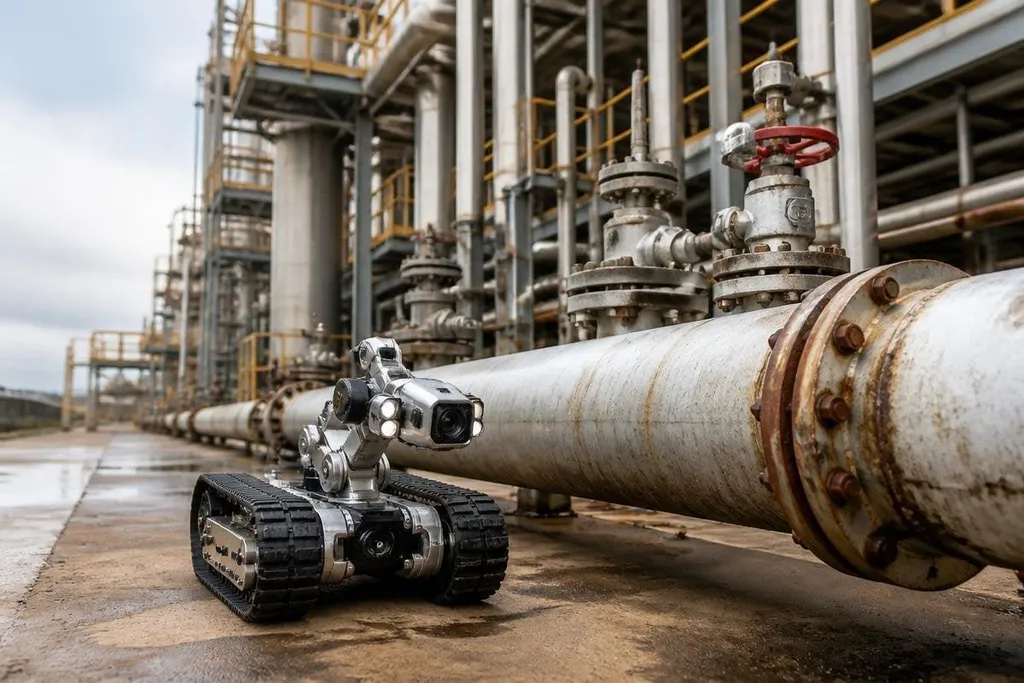
Oil and gas sites contain long pipe runs, tall vessels, confined spaces, and areas where flammable gas may be present. A tracked robot can move along a prepared route while cameras record valves, joints, insulation, and signs of damage.
A drone takes a different route. It can inspect towers, storage tanks, and other high structures from the air. That can reduce the need for a person to climb during an early inspection, though wind, dust, poor light, and blocked views still limit what the drone can see.
Underwater robots handle another part of the job. A remotely operated vehicle, or ROV, uses a cable and a control station to inspect subsea pipes, hulls, and other equipment. The operator remains in control while the vehicle sends back video and sensor data.
What the sensors add
A camera shows visible damage, but oil and gas inspection often needs more than a clear image. Gas sensors can check for leaks, thermal cameras can show heat differences, and ultrasonic tools can measure wall thickness without cutting into the pipe.
Each sensor answers a different question. A gas reading may point to a leak. A thermal image may show a hot bearing or blocked flow. An ultrasonic measurement may show metal loss that a normal camera cannot see.
The value comes from joining the reading to a place and a time.
If a robot records the same valve during each inspection, the operations team can compare changes instead of relying on memory or separate notes. That record can help decide when a technician needs to visit the site.
Where the limits remain
Trained workers remain necessary. Someone still has to set the route, check the machine, review the data, and confirm that a mark on an image is a real fault rather than dirt on the lens.
Movement can fail too. Loose gravel, stairs, standing water, strong wind, glare, and narrow passages can stop a robot or reduce the quality of its readings. A drone may reach a tank quickly but lose a useful view when pipework blocks the camera.
Safety rules also matter. Equipment used near flammable gas needs the right protection for that site. Equipment that works well in a clean test area may need different hardware, software, or operating limits at a live facility.
I'd treat any claim about fully autonomous inspection as unfinished until the maker shows the route, the sensor data, the failure cases, and the human review step.
Engineers comparing oil and gas systems can use oil and gas robotics reporting to check the robot model, inspection route, sensor, test date, and human review step behind a field claim. Those details give the operations team something concrete to assess before the article looks at how automation changes daily work.
What changes for the operations team
The main change is the order of work. Before a crew is sent to the site, the system can collect images and readings, so the crew arrives with a narrower task and a better idea of the equipment involved.
That only works when the data fits existing maintenance systems. A video file saved on a laptop is hard to compare with a work order. A useful system links each image or reading to the asset name, location, inspection time, and finding.
The people running the site also need a recovery plan. If a robot loses its signal, runs low on power, or gets stuck near equipment, someone must know how to stop it and retrieve it without creating a new hazard.
Before you buy
Use this check before choosing a robot for an energy site:
- Name the first task: Pick one inspection route, asset type, or sensor need instead of buying for a broad promise.
- Check site limits: Record stairs, gravel, water, wind, radio coverage, lighting, and areas where gas may be present.
- Match the sensor: Ask what the camera, gas sensor, thermal camera, or ultrasonic tool can measure and where its readings fail.
- Plan human review: Set out who checks the data, who confirms a fault, and who creates the repair work.
- Test recovery: Find out how the team stops, moves, charges, and retrieves the robot after a failed run.
The next useful step is a small route with a clear pass condition: the robot must collect usable data from a named asset under normal site conditions. Until that record exists, the purchase is a trial, not a replacement for inspection work.